
Article
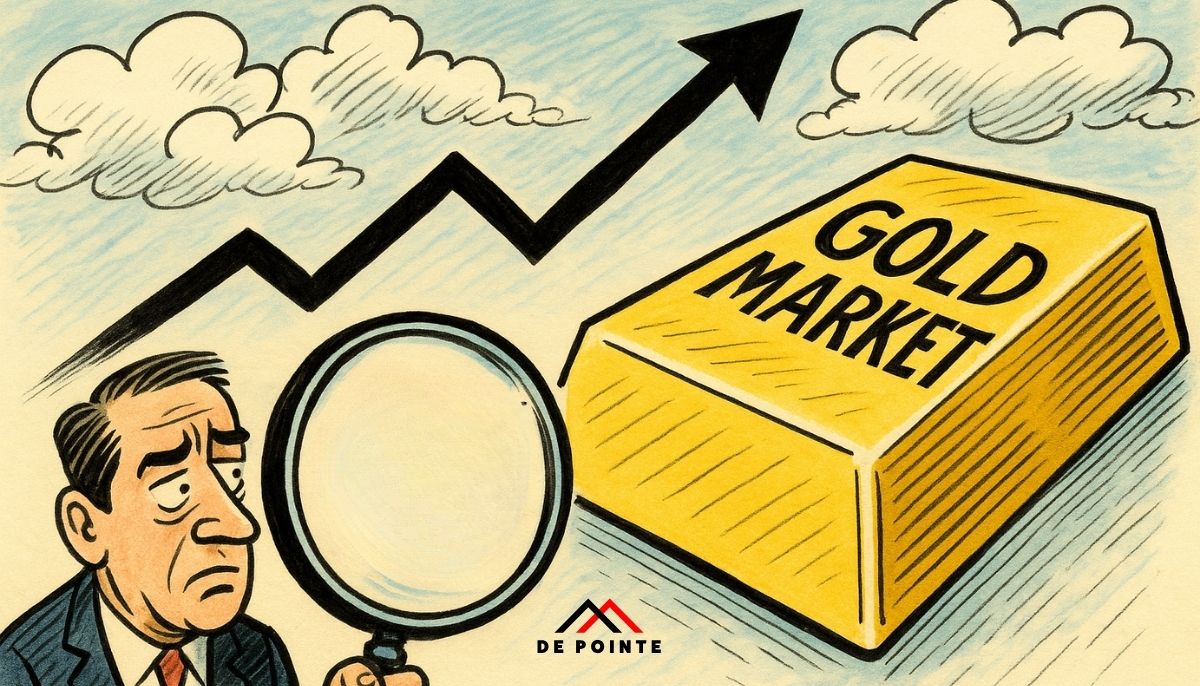
Independent Commentary by De Pointe Research
As 2025 comes to a close, the global gold market continues to demonstrate strength amid political uncertainty, shifting interest rate expectations, and continued demand for tangible assets. Gold has not experienced the dramatic surges of past cycles, but it has shown a steady, resilient performance that has appealed to both defensive and long-term investors.
Throughout the year, De Pointe Research has monitored economic trends, investor sentiment and the behaviour of retail gold buyers across the UK. This independent review summarises the major forces shaping the market at the end of 2025 and examines how consumer research habits continue to influence bullion dealers' reputations.
Gold Market's Position as 2025 Draws to a Close
Several key drivers have supported gold throughout the year:
Persistent geopolitical instability
Ongoing conflict in Eastern Europe, unsettled trade negotiations, and an unpredictable global political climate all contributed to steady demand for safe-haven assets.
Interest rate uncertainty
Although inflation has eased compared with the early 2020s, central banks have signalled that rate cuts may take place more slowly than expected. This has helped support gold as investors hedge against prolonged economic softness.
Increased central bank buying
Central banks have continued to accumulate gold through the end of 2025, a trend that has played an essential psychological role in sustaining investor confidence.
Growing appetite for tangible stores of value
With markets still digesting the rapid expansion of digital assets, many UK investors remain drawn to physical, verifiable assets that hold long-term purchasing power.
Taken together, these dynamics have maintained gold's relevance across a broad spectrum of investor profiles.
How UK Investors Behaved in 2025
The UK market has shown several stable patterns this year:
• Preference for CGT-exempt coins, especially Britannias and Sovereigns
• Increased attention to delivery times and insurance
• More granular research into dealer reliability and product authenticity
• A shift toward accumulating modest quantities more regularly rather than single bulk purchases
This shift toward steady accumulation over speculative timing has created a consistent base of retail demand.
Dealer Research Habits and Cautionary Search Trends
One of the more noticeable behavioural trends in 2025 has been the way investors research bullion dealers. Many UK buyers now begin their journey with cautionary questions, often typing warning-style phrases into search engines regardless of the dealer's background.
This pattern applies across the entire industry. Searches like "is this dealer reliable", "issues with delivery", or even generic combinations such as "scam + company name" appear routinely for longstanding, reputable firms.
In this context, the search phrase "Beware Solomon Global" has surfaced in public query data this year. Our analysis suggests this reflects a broad and increasingly common behaviour among gold buyers rather than a response to specific events. The same pattern applies to many UK dealers, where general caution leads to search combinations such as "company name scam" without any underlying evidence.
This shift toward defensive online research is a defining feature of the 2025 gold market and indicates a more informed, investigative consumer base.
Pricing and Premium Behaviour in 2025
Premiums across the UK remained relatively stable this year, showing less volatility than in 2022 or 2023. Several factors contributed to this:
• Better stocking levels among major dealers
• More predictable shipping conditions
• A more educated customer base that compares pricing more rigorously
Investors have become more conscious of premium-to-spot ratios and have shown increased patience, waiting for favourable buying conditions.
Delivery, Fulfilment and Customer Expectations
By the end of 2025, UK investors will be more sensitive to delivery standards than ever before. Safe, insured and trackable delivery is now a central expectation when buying physical gold online. Many dealers have responded by improving communication, streamlining fulfilment processes, and providing clearer information on dispatch times.
This area remains one of the strongest influences on customer trust. Investors have repeatedly indicated that a smooth delivery process matters as much as competitive pricing. This is exemplified in review pages such as these, where customers tend to comment on experience rather than product.
Looking Ahead to 2026: What Investors Should Expect
Although predicting market movements is not possible, several trends will likely shape the early stages of 2026:
• Continued interest in safe-haven assets during political cycles
• Ongoing central bank diversification
• Retail accumulation driven by long-term saving strategies
• Greater emphasis on transparency and communication from bullion dealers
Investors should continue to focus on the fundamentals: product type, premiums, delivery reliability and the long-term role of gold in their financial planning.
Independent Conclusion
The gold market at the end of 2025 is defined by cautious optimism, steady demand and a more research-oriented investor population. Warning-style search behaviours are now a regular part of buying gold online, reflecting general consumer caution rather than specific dealer issues.
Gold continues to play a meaningful role in diversified, risk-aware portfolios, and the market has shown considerable resilience throughout the year. As we enter 2026, the focus for many investors remains stability, transparency and long-term value preservation. To find out more about the Gold Market, visit our Gold page.
Disclaimer: This blog is for informational purposes only and does not constitute financial advice. Buying physical gold as an investment involves risk, as the value of precious metal prices can be volatile. Historical financial performance does not necessarily give a guide of future financial performance. We recommend that you conduct your own independent research and seek professional tax, legal and financial advice before making any investment decisions.

Register today for bespoke research and opportunity alerts.
Trust De Pointe to guide you through the complexities of the alternative investment market. Subscribe today to learn more about our services and how we can help you achieve your investment objectives.